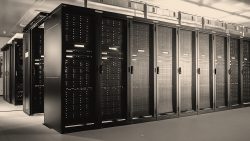


With AI playing an increasingly crucial role in the efficient management and resilience of modern power generation and transmission systems, grid operations and artificial intelligence (AI) are now converging. As reinsurers reassess the mutual pressures between power grids and AI, what are the underwriting implications when these two critical infrastructure pillars begin to reshape each other?
The convergence of power grids and AI will significantly impact the reinsurance industry, driving systemic risk while opening major growth opportunities through rising demand for infrastructure, grid, and transmission coverage. In short, re-insurers will need to confront the challenges of understanding and quantifying these new risks, while also designing and offering new products for the infrastructure driving this emerging AI economy.
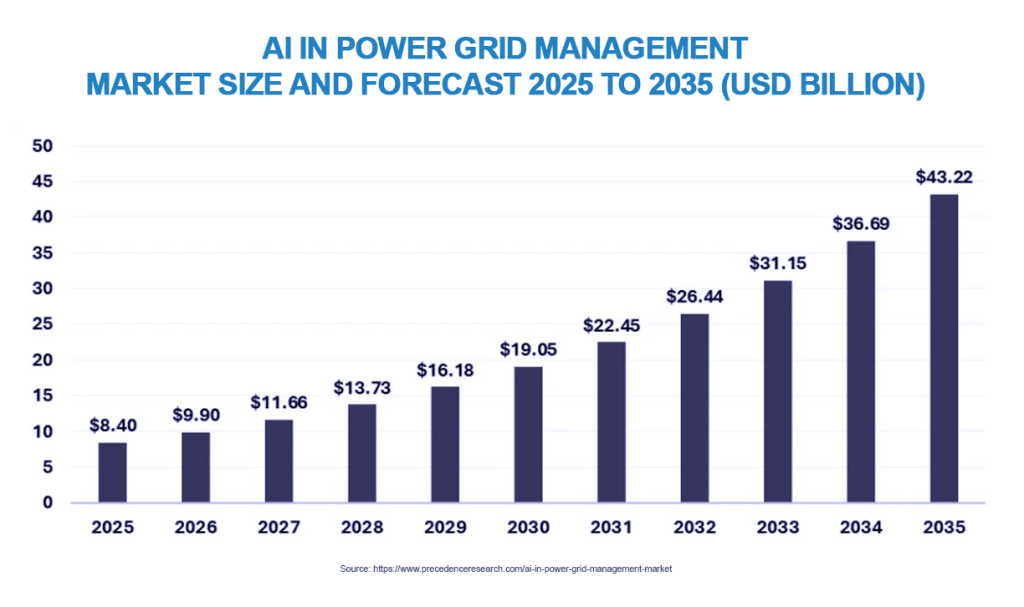
What are the constraints on ‘AI-as-infrastructure’ in power grids?
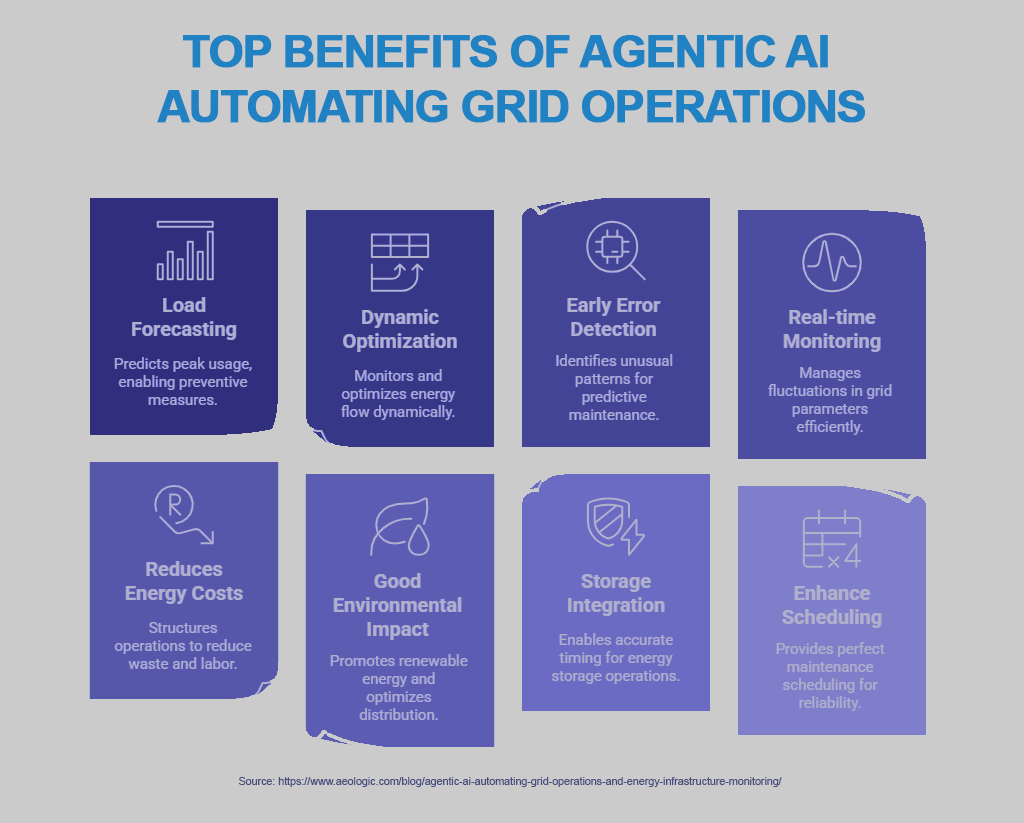
As the World Economic Forum (WEF) notes, “the [power] grid and the algorithm are no longer separate stories.” In other words, AI could have a major impact on how electricity generation and transmission is designed, constructed and managed in a changing world in which energy consumers – both commercial and residential – also function as power storage and generation facilities. As the WEF indicates, AI can manage commercial buildings and distributed storage to optimise when power is generated, consumed, stored, or sold. “When industrial users become active grid participants”, says the WEF, “the demand side of the electricity system acquires the intelligence that has historically sat mainly on the supply side. The grid gains not just more assets, but more decision-makers: millions of buildings, batteries and industrial sites are able to absorb variability and respond to prices.”[1]
Nevertheless, transmitting and exporting renewable power remains a major problem for grid operators worldwide, as shown by widening congestion-driven price gaps between southern and northern Europe.[2] In the UK, Ireland and Germany, generation curtailment – a situation in which generators are paid not to produce electricity because of low demand – has become a common feature of national grids. According to Montel Energy, one of Europe’s leading energy-market intelligence organisations, the UK alone curtailed around 10TWh of power in 2025, the equivalent of the power demand for all residential dwellings in London for a whole year. This resulted in an additional £1 billion in costs[3] for consumers. So-called negative-price hours are on the rise as operators are forced to pay neighbouring countries to permit them to dump excess power via interconnectors during periods of high production but low demand.[4] These are problems that even AI cannot currently solve.
In the GCC, ambitious plans among member nations to diversify and become digital hubs for AI and cloud services have also created immediate infrastructure demands that often require years of planning. After all, the speed of growth and the geographical concentration of data centres mean that the GCC’s ambitions cannot be realised simply by facilitating more computer power with available land; the region needs access to vast quantities of clean power and cooling water, as well as reliable transmission and distribution networks, to allow the data centres it is attracting to the region to maintain the exacting reliability demanded of them.[5]
While AI can help transform the design and management of power grids, its seemingly insatiable demand for power is creating another problem that threatens to curtail its future development. Consequently, the need to site renewable generation close to new data-centre construction is causing a rethink on where best to locate both. Hyperscalers’ demand for clean power is driving the co-location of renewable-energy generation with new data centres, and that co-location may be sufficient to provide the power AI needs to manage the world’s power efficiently.
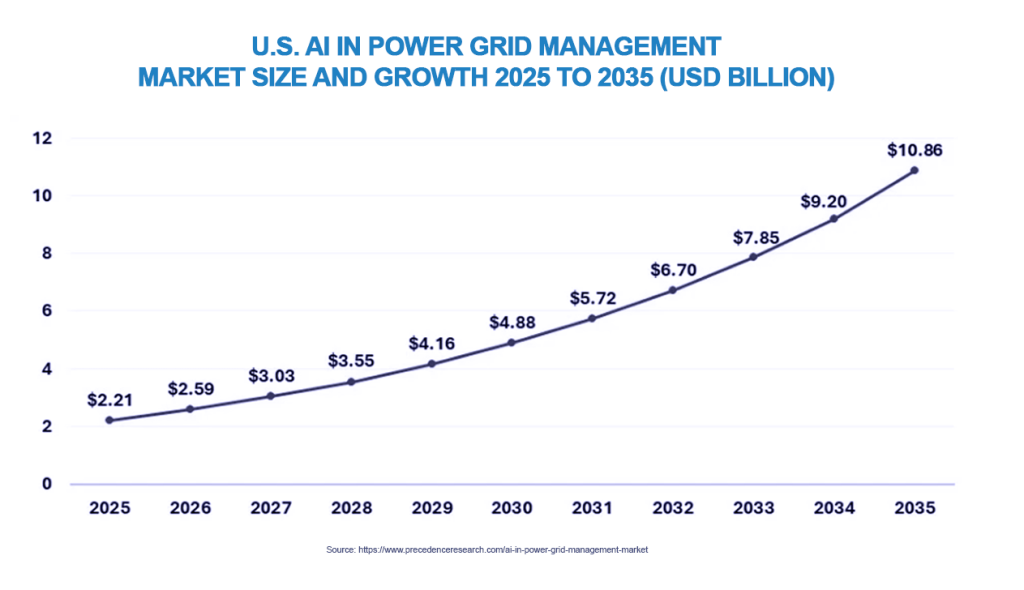
The JENOA view: what are the risks and opportunities?
Alongside all this, the rapid investment in and development of AI infrastructure, alongside AI’s increasing demand for clean, renewable power, represents a major opportunity for re-insurers. According to estimates from Swiss Re, AI and power-generation investment could deliver approximately US$200 billion in commercial premiums over the next four years.[6]
Although there may be grounds for scepticism regarding the existing predictions for the delivery of AI infrastructure,[7] current data-centre growth is nevertheless creating demand for various cover lines over and above simple property and construction cover, including cyber insurance, business interruption, and a number of speciality lines. AI data centres are multi-billion-dollar assets, all dependent on reliable power supplies for computational capacity, cooling, associated cloud infrastructure, and telecommunications networks. In short, their reliance on reliable power and telecommunications will create multiple interconnected exposure to risk.[8]
According to the World Energy Council, AI’s insatiable demand for power means that, even if current predictions prove overly optimistic, existing plans to build even more data centres are on a collision course with the realities of infrastructure constraints. This, in turn, is likely to force trade-offs when it comes to deciding what is in the best interests of the global economy: energy security, affordability, or decarbonisation?[9]
From a GCC perspective, the economics of AI data-centre development may affect where those data centres end up. After all, ambitions to diversify into digital hubs are becoming less about attracting hyperscalers with available land and business-friendly regulatory regimes, and more about which jurisdictions can react the fastest to offer those technology companies the most attractive blend of what they need: reliable power, modern power grids, appropriate cooling systems and state-of-the-art digital connectivity.[10]
There is an opportunity to mitigate much of that risk by making AI infrastructure decisions dependent on the security of power supplies, making AI-demand behaviour an integral part of power-transmission modelling, and factoring “compute competitiveness”[11] into energy-storage plans. As the WEF makes clear, “decisions once made in separate rooms – power purchase agreements, grid expansion plans, cybersecurity protocols and AI procurement – are now interdependent”.[12]
What does this mean for MENA clients and how can JENOA help?
With expertise in helping re-insurance clients design and tailor products to meet growing demand in the GCC and wider MENA region, JENOA is well placed to steer clients through the risks associated with AI’s speed of deployment and the increasingly fragile infrastructures it may rely on.
Risk exposures relating to culpability for system collapse and cascading failures may currently fall outside many existing business-interruption policies, and large technology organisations will have to mitigate that growing risk with new products and speciality coverage to protect against the developing interconnectedness of AI capacity on the one hand, and a grid infrastructure that cannot keep up with the relentless pace of data-centre development on the other.
Can we overcome this mismatch in the next decade?
As the increasingly disparate demands and realities of AI infrastructure and global power grids begin to redefine our approach to both, re-insurers will likely be able to offer broader and deeper coverage not just for AI and renewable-energy infrastructure, but for potential cascading infrastructure failures. After all, the AI data centres responsible for managing power grids and supply/demand gaps intelligently will become increasingly exposed to the power-grid fragility and instability they are likely to create.
In the GCC, competitiveness could be determined not by the ultimate aggregate computing power of its AI data centres, but by which jurisdictions and which re-insurance partners can combine to offer the most reliable and efficient proposition.
[1] https://www.weforum.org/stories/energy-transition/how-ai-and-power-systems-are-rewriting-each-others-rules
[2] https://reports.weforum.org/docs/WEF_Electricity_Reinvented_2026.pdf
[3] https://montel.energy/resources/reports/2025-gb-and-ireland-curtailment-repor
[4] https://reports.weforum.org/docs/WEF_Electricity_Reinvented_2026.pdf
[5] https://gccbusinesswatch.com/news/the-infrastructure-behind-the-gulfs-ai-ambition-why-electricity-and-grid-capacity-could-determine-the-next-phase-of-digital-growth/
[6] https://www.sphericalinsights.com/blogs/beyond-traditional-risk-how-ai-climate-and-geopolitics-are-reshaping-global-insurance
[7] https://eandt.theiet.org/2026/05/01/finite-resources-could-cause-data-centre-crunch-2026
[8] https://www.weforum.org/stories/energy-transition/how-ai-and-power-systems-are-rewriting-each-others-rules
[9] https://gulfbusiness.com/en/2026/energy/ai-power-demand-grid-constraints-reshaping-global-energy-system-world-energy-council/
[10] https://gccbusinesswatch.com/news/the-infrastructure-behind-the-gulfs-ai-ambition-why-electricity-and-grid-capacity-could-determine-the-next-phase-of-digital-growth/
[11] https://www.weforum.org/stories/energy-transition/how-ai-and-power-systems-are-rewriting-each-others-rules
[12] https://www.weforum.org/stories/energy-transition/how-ai-and-power-systems-are-rewriting-each-others-rules