


Dubai has seen major growth in Managing General Agent (MGA) activity in the last 12–18 months, and the momentum behind that growth is likely to have a significant effect on the regional insurance landscape. Mirroring the extraordinary proliferation of MGAs in mature markets such as the UK, the MGA model is looking increasingly attractive across the Middle East as large re-insurers seek to gain access to speciality lines across diverse geographies more efficiently and effectively through MGA-carrier partnerships.
Why is the MGA model attractive?
With the ability to react rapidly to changing customer needs and market opportunities, especially in niche segments that are too complex or too dynamic for large carriers, MGAs have the capability to innovate faster, and through MGA-carrier partnerships, re-insurers can gain immediate and responsive access to product innovation in new regions. Such innovation can help expand revenue through digital channels, as MGAs continue to position themselves at the forefront of technology adoption across underwriting, distribution and risk management. This makes partnering with MGAs an ever more vital feature of a re-insurer’s ability to understand risk exposure and risk pricing.
As global research firm Everest Group notes, one of the major reasons for the success of MGAs is their ability to quickly identify new risks and coverage gaps and develop new products that can go to market more quickly and with lower administrative and capital burdens. “Sitting close to brokers and customers”, notes Everest Group, “MGAs spot emerging risks and translate them into narrow-appetite programs with sharper underwriting rules and faster iteration cycles.“
MGAs account for roughly 40% of Lloyd’s total premium volume through delegated authority. With more MGAs gaining Lloyd’s coverholder status, these entities are perfectly placed to expand specialist coverage across multiple international markets.
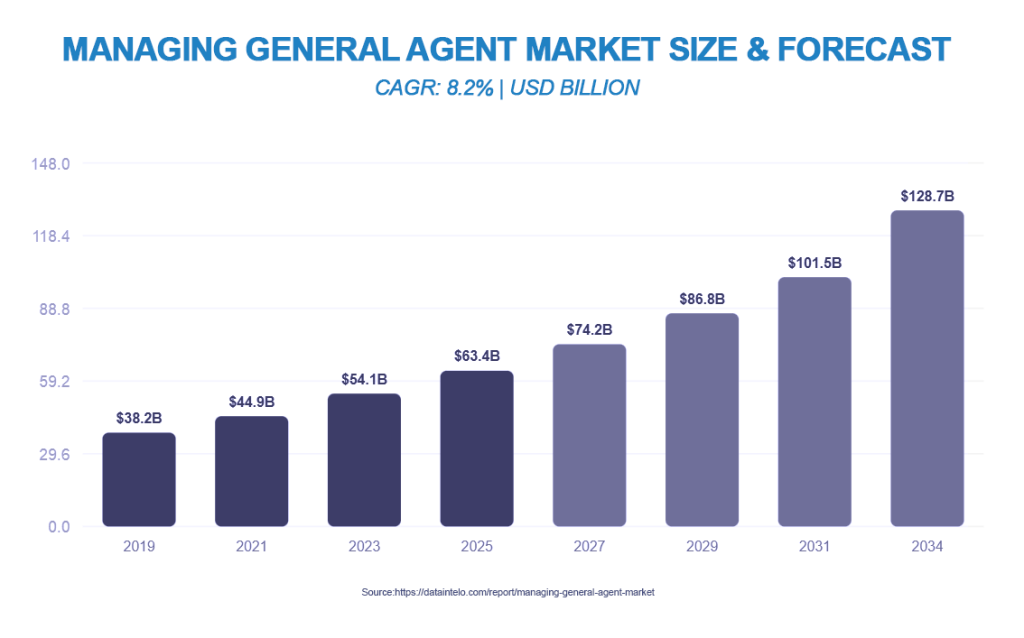
The JENOA view: will ME markets continue to mirror the UK market and spawn more MGAs?
To a large degree, the sense of optimism driving the UK insurance market is largely down to the agility, flexibility and innovation of the MGA sector. Rather than acting as mere intermediaries, these entities have become true drivers of innovation. When combined with the supportive and fertile financial ecosystems in the Middle East, these markets are proving that, like the UK, they too are well placed to both facilitate this activity and attract more MGAs – as well as more re-insurers and capital – to the region.
As Mike Keating, CEO of the UK’s Managing General Agents’ Association, notes, “MGAs are now integral to the insurance value chain. Far from being solely a niche channel, they drive product innovation, accelerate digital transformation, and provide carriers with the specialist insight needed to navigate today’s complex risk landscape“.
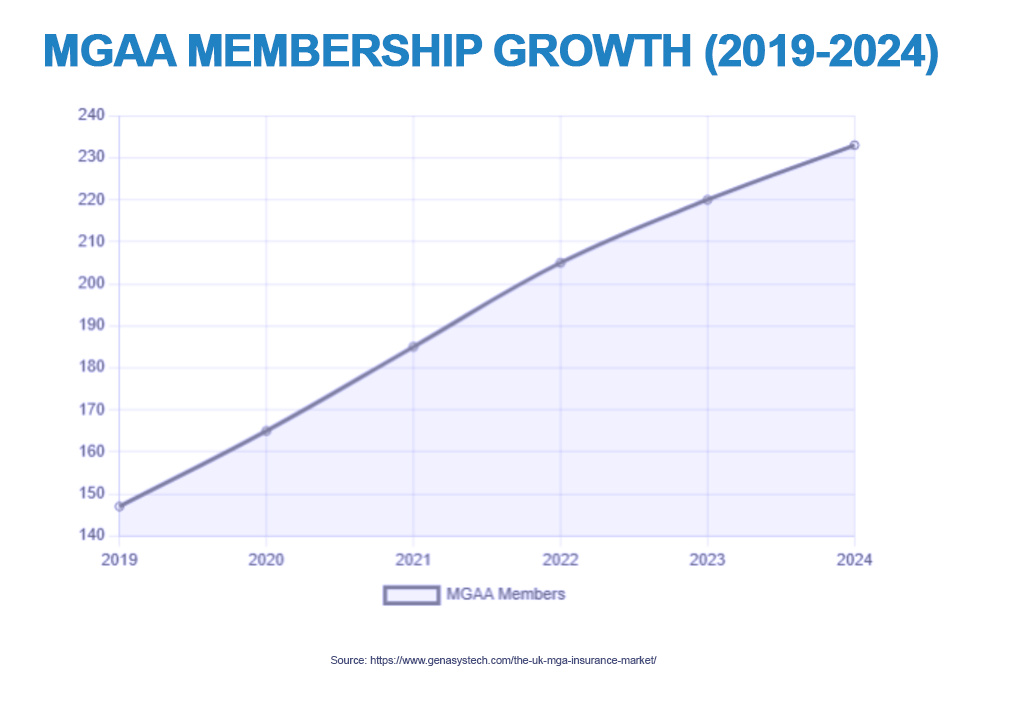
As a result, the UK’s MGA sector has grown to more than 350 organisations, between them underwriting more than 10% of the UK’s GBP £47 billion in general insurance premiums.
The Middle East is poised to replicate the UK’s MGA growth, driven by regulatory relaxation in the UAE and Saudi Arabia. By offering partnerships with lower operating costs and reduced capital requirements, MGAs provide an efficient entry point for new carriers. Ultimately, this ecosystem serves to attract international reinsurers into Dubai, Riyadh and other regional hubs where they currently lack a presence.
Since the end of last year, Dubai has seen around nine applications submitted and over a dozen additional firms reportedly poised to join the market, with 11 new MGAs authorised by the Dubai Financial Services Authority (DFSA) during H2 2024 and H1 2025[1]. This influx is largely down to the fact that MGAs have become an indispensable element in driving growth for international speciality insurers. Often more efficient and cost-effective than the traditional local branch office of an insurer, MGAs offer access to specialist risk markets, and with insurers increasingly attracted to the growing insurable risks in Dubai, the UAE and beyond – from digital infrastructure to renewable energy and construction – the region is likely to see continued growth in MGA activity to enable those re-insurers to grow successfully.
Saudi Arabia has also recognised the value of MGAs in the region, introducing a new licensing framework earlier this year. This framework now alters the rules around underwriting and, for the first time, allows MGAs with delegated authority to establish themselves in the Saudi Arabian market. So far, Saudi Arabia, Dubai’s DIFC and Abu Dhabi’s ADGM are the only jurisdictions in the Middle East that recognise and permit MGAs.
As DIFC’s chief business development officer notes, MGAs’ technical expertise and bespoke underwriting capabilities are likely to add further levels of maturity to markets in the ME region. DIFC has seen significant and consistent year-on-year growth in MGA activity, and they now contribute a staggering two-thirds of the total gross written premiums (GWP) in DIFC[2] and make up over 50% of DIFC’s insurance sector, up from 43% in 2023. “Ultimately, the flexibility and agility that defines the MGA model will play a big role in supporting the region,” says DIFC’s development officer. “We surmise that MGAs will remain relevant and shape the future of insurance in the Middle East“.
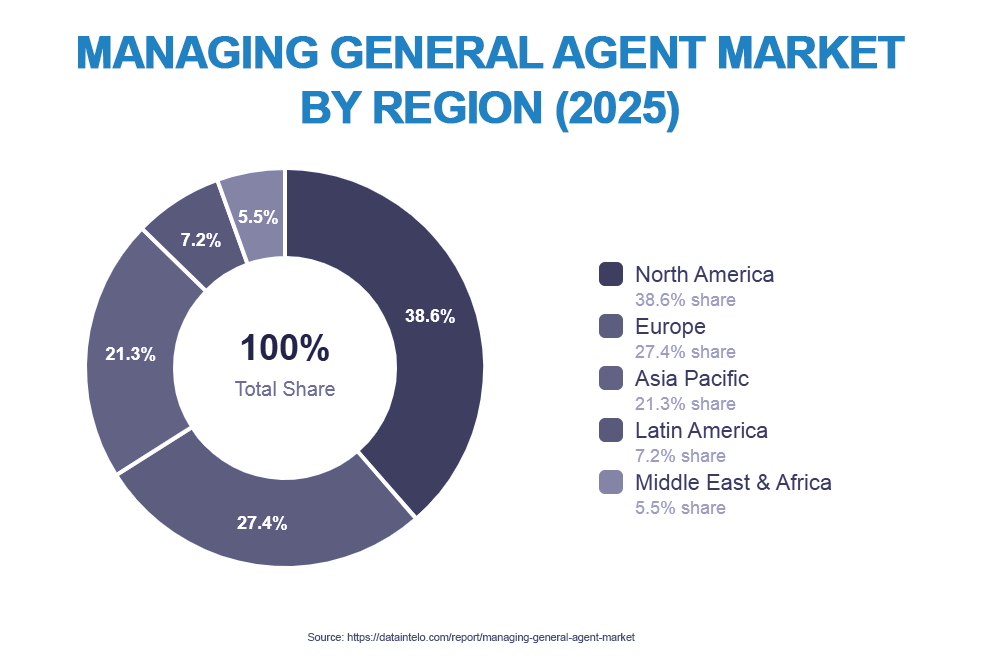
Regional ME markets respond well to local solutions and tailored cover, especially when those local solutions can be innovated quickly and translated into market-ready products. Indeed, MGAs’ highly valued agility in product development is helping to underscore their value and credibility in the UAE. “By reaching markets that some carriers are unable to serve”, notes DIFC’s chief development officer, “MGAs reinforce Dubai’s position as a gateway to emerging markets in the Middle East and North Africa (MENA)…Their underwriting expertise also puts them in a unique position to bridge the insurance gap in a largely underpenetrated region“.[3]
What does this mean for ME clients and how can JENOA help?
Through our partnership in Saudi Arabia we have access to licensed retail and reinsurance brokerage capabilities and are keen to leverage this expertise, to set up MGA structures in this vibrant market
Also with access to Lloyd’s of London, as well as major international re-insurance hubs, JENOA leverages conventional Lloyd’s capabilities and global re-insurance expertise to develop innovative products and speciality lines.
If you are keen to explore an MGA structure in Saudi Arabia, please reach out to me on khanmma@jenoa.com to explore a possible collaboration in Saudi Arabia.
Can market and sector synergies deliver sustained success?
Local expertise will remain key to the success and growth of MGAs in the Middle East as they continue to innovate in product development, digital penetration and speed to market. The synergies offered by the region’s insurance markets and MGAs’ niche capabilities are likely to enable the sector to continue thriving as carriers seek to access local markets and speciality lines without the costly burden of developing in-house underwriting and distribution channels.
Their capability to combine agility, technical expertise, innovation and speed to market whilst working alongside traditional brokers and agents, will further enhance insurance markets in the Middle East by offering local solutions for specialist and underserved markets with low penetration rates and significant insurance gaps.
[1] https://www.difc.com/whats-on/insights/mgas-power-difc-dominance-in-measa
[2] https://www.difc.com/whats-on/insights/mgas-power-difc-dominance-in-measa
[3] https://www.difc.com/whats-on/insights/mgas-power-difc-dominance-in-measa