

When it comes to the protection of humanity and the environment, there are obvious and powerful synergies between the principles of Islamic finance and the values encapsulated in the investment principles of ESG (Environmental, Social and Governance). This alignment exists because Islamic finance dictates that capital is raised and invested through the prism of inclusion, common interest, social justice and the avoidance of harm, in accordance with Shariah law.
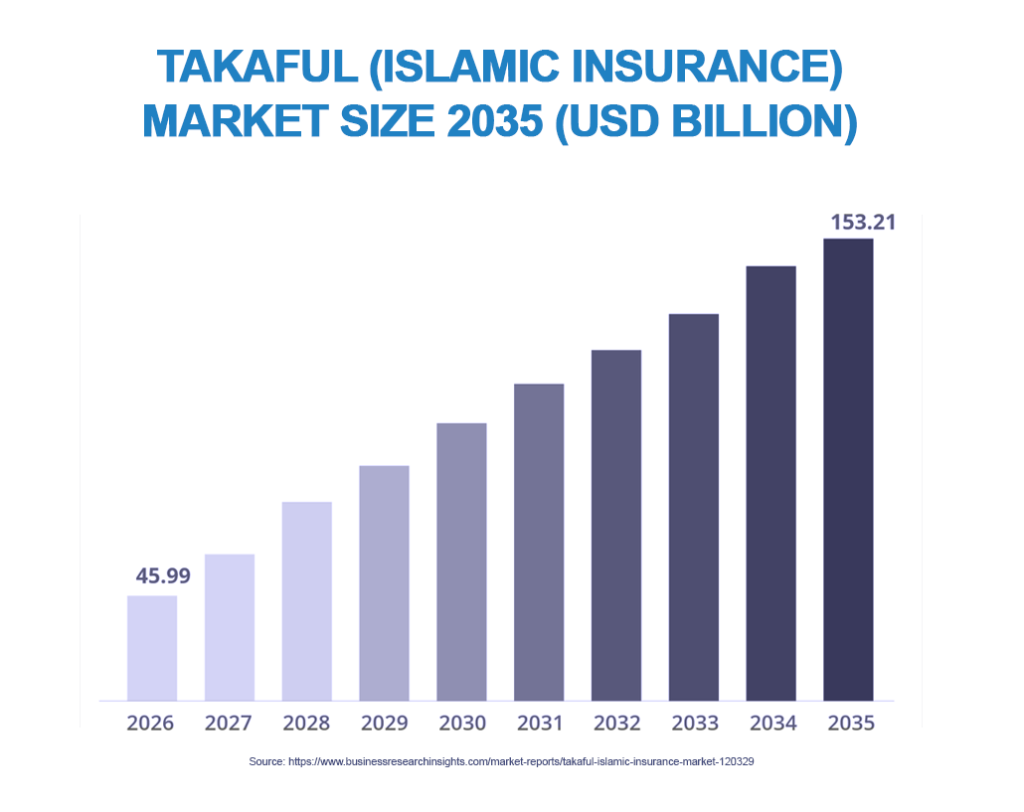
Whilst some elements of conventional finance and insurance are unacceptable under Shariah – for example, interest, uncertainty and the trading of risk and debt – there is more overlap than conflict between the two. In fact, as both are concerned with the protection of humanity and the world we live in, the synergies point to a promising period of growth for Islamic finance and insurance (Takaful) as the broad concepts of ESG investment place more emphasis on the notions of common interest, social justice and the avoidance of harm.
ESG is not a new concept in Islamic insurance and finance, although Shariah-compliant products and services require a much higher and stricter level of compliance than ESG proscriptions, which tend to be more loosely defined and in constant evolution.[1]
So, how do the principles of ESG stand up to scrutiny through the prism of Shariah compliance?
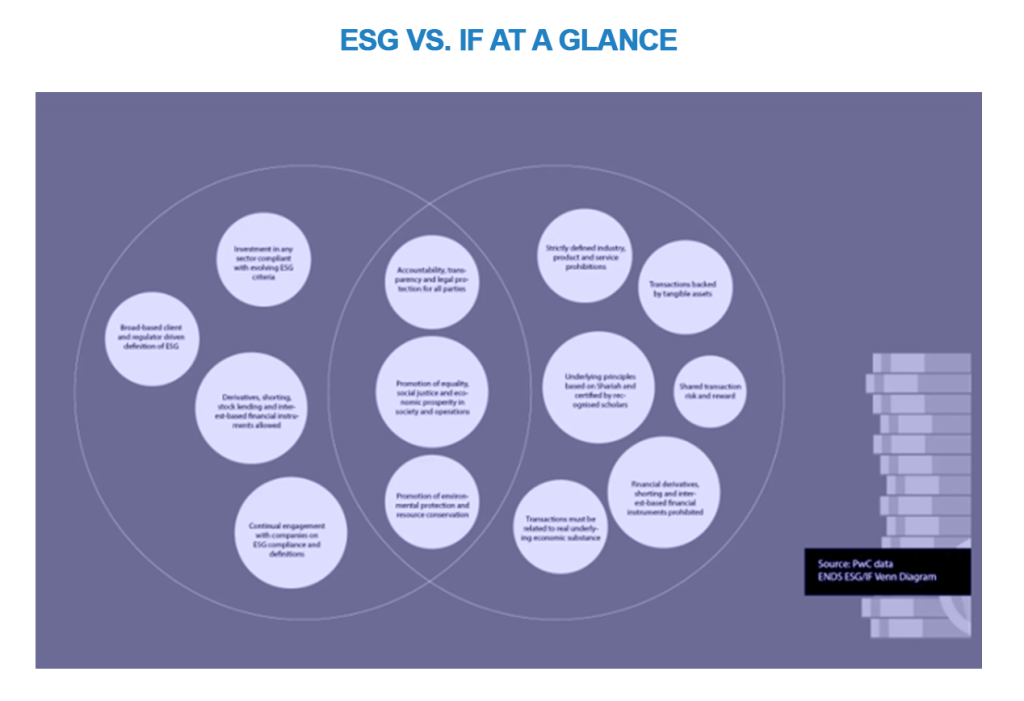
How do the principles of Islamic finance compare with ESG?
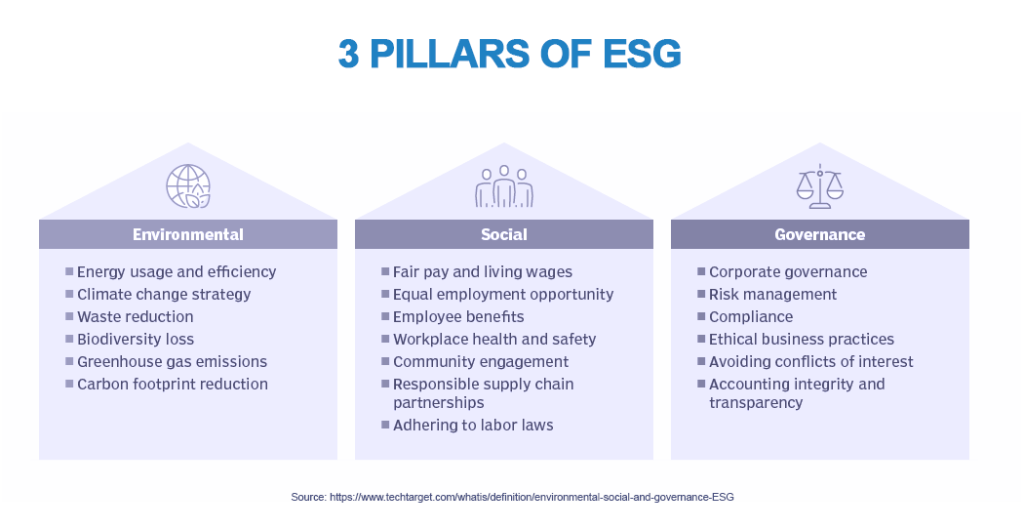
There are three core pillars behind the principles of ESG: environmental, social and governance. The first focuses on a company’s impact on the planet. This includes how organisations measure, mitigate, and reduce carbon dioxide emissions and manage environmental pollution; it also assesses the sustainability and efficiency of a company’s use of the planet’s finite resources, as well as how it recycles waste. In the sense that ESG encourages lower carbon dioxide emissions and the sustainable use of resources through a more circular economy, the focus of Islamic insurance and finance on avoiding harm and protecting the planet and its people aligns neatly with the aims of ESG.[2]
So, too, do the underlying principles and objectives of Maqasid-e-Shariah, which place fairness and social responsibility at the heart of Islamic finance, underpinned by Islamic law. ESG’s social aspect scrutinises how organisations manage relationships with employees, suppliers and local communities ethically. Under Islamic finance, social responsibility encompasses human rights, diversity, and respectful community engagement. It also mandates the full economic inclusion of people with disabilities by removing physical and financial barriers. In short, the overlap encompasses human rights, a healthy and sustainable work-life balance, and ensuring that organisations promote standards of fair employment and truly equal opportunities. As the CFA Institute and the UN-backed Principles for Responsible Investment (PRI) note, “both Islamic and ESG practices are seeking to avoid investing in businesses that are considered harmful. In that sense, Islamic finance could be understood as a socially responsible paradigm rooted in religious tenets.”
The requirement for transparency in Islamic finance in a company’s capital structure also aligns with the governance aspect of ESG, which examines business ethics as well as employee remuneration, a company’s management structure, board pay packages and the rights of shareholders in a company’s governance.
The JENOA view: understanding the differences – can ESG learn more from Islamic finance?
As alluded to above, the principles of Islamic finance and insurance are far stricter and more expansive in their proscriptions than those of ESG. For example, Islam’s outright ban on usury includes interest and does not differentiate between the terms ‘usury’ and ‘interest’, however small the amounts involved. By comparison, conventional finance within the bounds of ESG compliance not only deals with debt and interest but often relies on it when a company is financed primarily through debt rather than equity. Although there are some ways around this for Islamic investors – for example, a set of relative measures such as thresholds for debt-to-equity ratios – a lack of equity can often rule out investment under Islamic finance.
How can JENOA help?
At JENOA, we are committed to providing new Shariah-compliant products to satisfy clients’ needs in accordance with their faith. We are well placed to help re-insurers meet the regulatory requirements from a Shariah perspective, and JENOA has the expertise to advise on Shariah-compliant insurance models, processes and policy wording, as well as helping clients develop a deeper understanding of the core Islamic insurance requirements that distinguish Takaful from conventional insurance.
Can shared objectives promote further convergence?
Although both Islamic finance and ESG are distinct investment-screening mechanisms in the sense that one is religion-based, fixed and defensive, whilst the other is ethics-based, proactive and in constant evolution, there is an element of convergence in their aims and objectives. This may lead to a closer alignment in the choice and analysis of risk, and in the assessment of an organisation’s capital structure as well as its primary source of income, as both seek to avoid harm and protect societies and individuals.
Nevertheless, as long as ESG reflects only investors’ preferences and ethics, rather than a fixed set of regulatory prohibitions to protect societies, guided by Shariah law and interpreted by Islamic scholars, full convergence is unlikely. Despite their common objectives, Islamic finance and ESG professionals need to confront the key fact that these markets lack alignment, and that understanding these distinctions creates distinct opportunities.